

Will a massage help a pinched nerve? Discover massage benefits, safe techniques, risks, treatment options, and when to seek medical care for nerve pain.
A pinched nerve happens when tissue puts pressure on the nerve. The surrounding tissues that can put pressure on the nerve include muscles, bones, cartilage, tendons, or spinal discs. It disrupts nerve signal transmission and causes symptoms either in the affected part or along the nerve’s path. Some common causes are:
- Herniated or slipped spinal discs
- Bad posture and long periods of sitting
- Repetition of movements
- Tightness or inflammation of muscles
- Spur formations in bones
- Changes from arthritis
- Injuries or inflammation
Neck nerve pinching may lead to pain or tingling sensation extending to the shoulder, arm, or hand. Pinching in the lower back may lead to symptoms extending to the buttocks or leg, often related to sciatica.
Will a Massage Help a Pinched Nerve?
Yes, massages will help relieve a pinched nerve. This is due to the fact that the massage helps reduce tight muscles that can squeeze or irritate the nerve. Additionally, massages promote circulation and relieve pain. In this case, massage therapy will not treat the actual problem in cases where there is a herniated disc, bone spur, or an inflamed joint. Massage may provide temporary relief by:
- Loosening up tense muscles around the region
- Easing the pain and stiffness caused by tight muscles
- Facilitating smooth movements
- Encouraging relaxation and relieving stress
- Aiding in managing pain from neck and back tension
This kind of therapy is most effective as an adjunctive treatment instead of a standalone one. Its efficacy is determined by the cause of the nerve compression as well as the kind of massage used. In cases of herniated disc, bone spur, and other conditions causing nerve compression, massage cannot solve the problem.
Benefits of Massage for a Pinched Nerve
Massage may help relieve muscle tension surrounding an irritated nerve and provide temporary pain relief. It can reduce stiffness, promote relaxation, improve comfortable movement, and support better mobility. Gentle massage may also help manage muscle-related discomfort in the neck, shoulders, and back. However, it cannot directly remove nerve compression or treat its underlying cause.
How Massage Can Help a Pinched Nerve
The massage acts upon the soft tissue surrounding the nerve. Neither does it move a disc nor eliminate a bone spur. The following are some effects that it can cause.
1. Relax tight muscles
Tightness of muscles will put pressure on the nerve and even cause joints to go out of position. Massage helps release the tightness of muscles to reduce the pressure on the structures around.
2. Improve blood flow
Improved circulation delivers more nutrients and oxygen to the irritated tissues and helps dispose of inflammatory products. Healthy tissue is tolerant to movement.
3. Reduce pain and muscle guarding
When there is irritation of the nerve, the muscle surrounding that nerve becomes tight as a way of protecting the region from further injury. Massage disrupts this vicious circle and provides temporary relief.
4. Improve range of motion
Muscles becoming loose allow you to move, stretch, and exercise without causing pain. Movements are crucial for a recovery of the nerve.
What Type of Massage Is Best for a Pinched Nerve?
The type of massage needed for pinched nerve symptoms will depend on the area of the body affected, the intensity of the symptoms, and the cause of the problem. A medical professional should examine any chronic or serious nerve problems before massage is attempted.
1. Gentle Therapeutic Massage
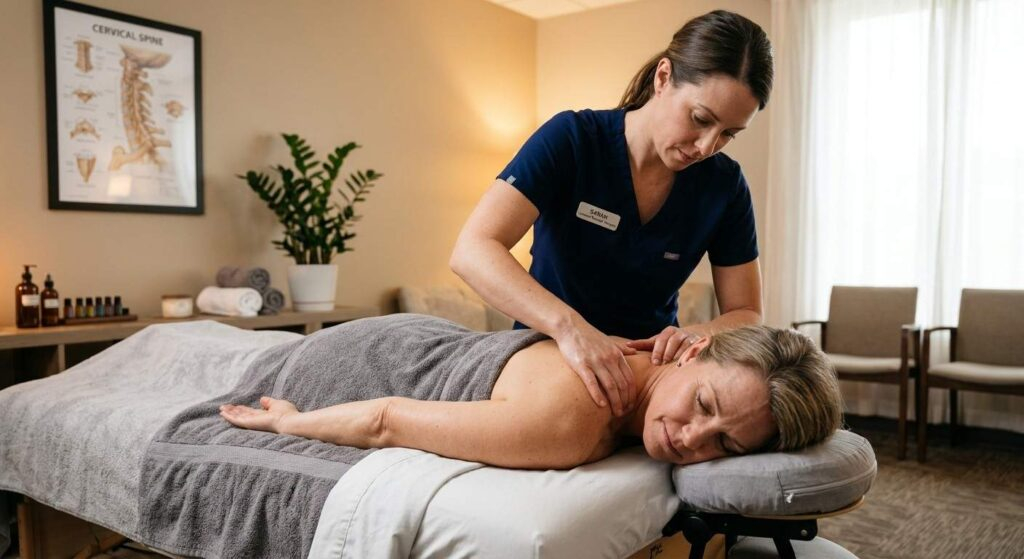
A therapeutic massage utilizes regulated pressure on muscles to ease muscle tension. Such massage could be beneficial for patients who are suffering from muscle tension in areas like the neck, shoulders, or lower back. A therapist can regulate the pressure used in massage, which should be relatively mild compared to an aggressive massage.
2. Swedish Massage
Swedish massage uses light movements, such as light stroking and kneading, which could aid in relieving muscle tension related to pinched nerves. However, Swedish massage should not apply pressure that leads to tingling, numbness, or radiating pain.
3. Myofascial Release
Myofascial release is when pressure is applied to connective tissues and surrounding muscles in a gentle manner and in a sustained position. A skilled practitioner might apply myofascial release to help with muscle tension and increase comfortable movement, but it will not release the nerve that is compressed by either a disc or a bone.
4. Physical Therapy and Manual Therapy
The physical therapist can apply selected techniques along with exercises, posture correction, and movements. It may help to alleviate the causes of muscle tension as well as to enhance strength, flexibility, and functionality. Physical therapy may be a better choice for those patients whose symptoms include the irritation of nerves, weakness, or chronic pain.
Can Massage Help a Pinched Nerve in Different Body Areas?
Massage may provide different benefits depending on where the nerve compression occurs.
Pinched Nerve in the Neck
A pinched nerve in the neck, also known as cervical radiculopathy, results in pain shooting down the arm or shoulder. Massage may be helpful in reducing the tightness around the neck and shoulders. Possible benefits include:
- Reduced stiffness in the neck
- Temporary relief of muscle pain
- Comfortable movement of the neck
- Relaxed shoulder muscles
Exercise caution against strong neck massage, sudden neck movements, and manipulation. In case of arm weakness and worsening numbness, consult a physician prior to massage therapy.
Pinched Nerve in the Lower Back
Compression of the nerve in the lower back causes pain, tingling, or numbness extending to the buttocks or leg area. Massage can be helpful to ease tension in the back muscles that could be caused by pain.
Nevertheless, massage cannot heal a herniated disc or spinal stenosis causing compression on the nerve. This will be diagnosed by a doctor or physical therapist, who will decide what kind of therapy would be appropriate.
Pinched Nerve in the Shoulder
Pain in the shoulder may result from irritation of nerves located in the neck, shoulders, or arms. In some cases, massage can help release tight muscles around the shoulder blades and upper back area.
However, shoulder pain may not necessarily indicate a problem with a pinched nerve. There might be many other causes of shoulder pain including injury of rotator cuff or joint disorder.
Pinched Nerve in the Arm or Wrist
Compression of the nerves in the arm or wrist could lead to numbness, tingling, weakness, or even burning. Compression of nerves includes carpal tunnel syndrome and cubital tunnel syndrome.
A massage around the muscles surrounding the affected area could help with muscle tension; however, massaging over a compressed nerve would worsen the symptoms. In case of constant numbness or difficulty gripping, see a doctor
How to Massage a Pinched Nerve Safely
When a healthcare provider determines that the gentle massage is appropriate, consider the following measures to avoid irritation.
1. Start With Gentle Pressure
Use light and comfortable pressure near the muscles, and not direct pressure on the irritated nerve. You should be able to feel some comfort or relaxation from the procedure. Do not have any sharp pains, burning sensations, tingling, or numbness during the process.
2. Avoid Direct Pressure on the Nerve
Avoid aggressive massaging of those parts that radiate any pain, numbness, or tingling. For instance, if moving the neck causes pain in the arm, avoid strong pressure on the neck and shoulders.
3. Keep Sessions Comfortable
Begin with a shorter treatment period and discontinue it if your symptoms get worse. There are no fixed time periods or frequencies for treating pinched nerves through massage therapy. It all depends on your symptoms and professional advice.
4. Communicate With Your Massage Therapist
Inform your therapist about:
- The location from which your pain originates
- Where your pain moves
- If you suffer from numbness or tingling
- What actions make your symptoms worse
- If there was a diagnosis of nerve compression by a healthcare provider
- If you have any health conditions
Select a good massage therapist who knows how to treat people with nerve symptoms and can adjust his or her technique accordingly.
What Other Treatments Help a Pinched Nerve?
Massage is only one option among many that might be used in the treatment. An individual will benefit from a treatment program, which depends on the reasons for and degree of nerve compression.
| Treatment | Potential benefit |
| Physical therapy | Improves strength, mobility, and movement habits |
| Activity modification | Reduces pressure or irritation from aggravating activities |
| Heat or cold therapy | May provide temporary pain relief |
| Appropriate medication | Helps manage pain or inflammation when medically suitable |
| Ergonomic adjustments | Reduces strain from sitting, working, or repetitive movements |
| Medical evaluation | Identifies the cause and guides appropriate treatment |
Physical Therapy
Physical therapy is useful for improving posture, flexibility, muscle strength, and motor skills. In particular, the therapist can recommend specific exercises that decrease irritation and improve functioning. Avoid any exercise that causes increased pain, numbness, or weakness.
Rest and Activity Modification
Temporary rest from irritating activities may ease symptoms. Nonetheless, inactivity for long periods will result in stiffness and weakness. Observe instructions from a professional about keeping movements comfortable.
Heat and Cold Therapy
Application of cold packs will reduce irritation and discomfort after irritating activities, while gentle heat will ease tension in tight muscles. Place a piece of cloth between the body and the pack. Do not use hot or cold packs on areas where sensation is decreased since you will not feel the damage to the skin.
Medical Treatment
A healthcare professional will decide which treatment option is better. In some cases, medications, physical therapy, more tests, or a referral to a specialist will be recommended. Some cases of nerve compression require medical procedures or surgeries.
Can Massage Make a Pinched Nerve Worse?
Absolutely. Massages could actually worsen a pinched nerve when they entail the application of too much force, wrong massage techniques, or direct pressure on the irritated nerve. Symptoms to look out for include:
- Pain that is shooting or radiating in nature
- Numbness that is getting worse
- Tingling or burning sensations becoming more intense
- Weakness in the muscles
- Worsening of symptoms even after the session
The massage must be stopped if the following symptoms arise. It is inadvisable for a massage therapist to try to manipulate the spine by force or push through nerve-related pain.
Can You Massage a Pinched Nerve Yourself?
Yes, you may massage the muscles around the pinched nerve only if it is medically approved to do so. You should not apply direct pressure or use any painful motions. If your numbness or pain increases, then you should immediately stop.
Conclusion
The use of massage therapy is effective in relieving muscle tension and tightness, as well as any discomfort associated with a pinched nerve. However, massage therapy alone will not be able to address the problem of nerve compression due to herniated discs, bone spurs, or other types of structural problems. It is important to use appropriate techniques for massage and consult a health care provider prior to engaging in therapy.