Discover baby massage benefits, safe techniques, step-by-step instructions, and helpful tips to support relaxation, bonding, and comfort for your little one.
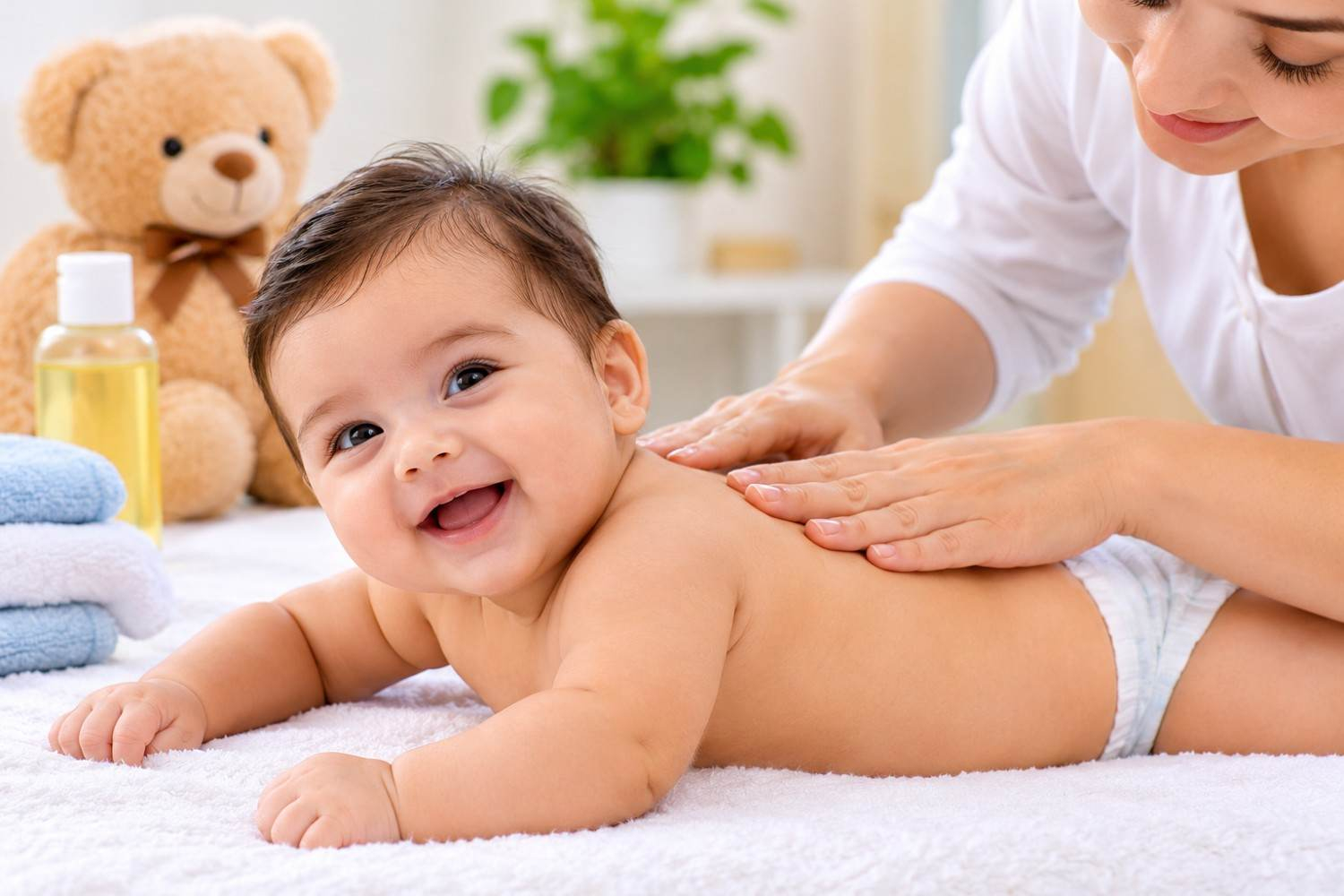
Baby massage refers to the gentle and rhythmic touching and stroking of the body of an infant in order to relax and bond. Parents usually massage the legs, arms, back, tummy, and feet of the baby by applying gentle strokes and slight pressure. The baby massage can be incorporated into the daily routine of care, given that the baby is comfortable with it.
What Is Baby Massage and Why Do Parents Practice It?
Baby massage is another type of nurturing touch, which helps parents bond with their babies through physical touch. It does not involve any tools or techniques, and requires no prior training.
Massage can be given to a baby during any relaxed period such as after bathing, before sleeping time, and when the baby is relaxed and awake. The objective of baby massage is not deep tissue work but rather touch, relaxation, and communication between the parent and the baby. Massage involves:
- Look into the baby’s eyes and speak softly to the baby.
- Pay attention to facial expressions and gestures.
- Gently stroke the limbs, legs, back, and feet.
- Stop whenever the baby looks uncomfortable.
- Develop a soothing regimen that fosters bonding.
Baby massage should always be based on the baby’s reaction. There are some babies who like massage, and some others like hugging or cuddling.
What Are the Benefits of Baby Massage?
Baby massage could have some advantages for babies both physically and emotionally. But there are different results in research, and there is no guarantee of certain health effects from massage.
1. Encourages Parent-Baby Bonding
Baby massage gives an opportunity for bonding between parents and their baby. Massage, eye contact, and conversation allow parents to get acquainted with their baby’s language of communication.
This bonding time could assist in developing the emotional connection between parents and babies and give confidence in communicating with their babies.
2. May Help Babies Relax
Massage might be helpful in calming some infants, especially when parents perform it gently with slow movements in a quiet setting.
A calm baby is one who will demonstrate less restlessness. Massage, however, cannot soothe all infants, and there are some that are more comfortable with other methods of calming themselves.
3. May Support Better Sleep Routines
The inclusion of massage during the infant’s bedtime is because it helps to ease a calm transition to sleep. It helps relax your baby before sleeping but does not ensure increased periods of sleep or prevent the baby from waking up at night. Regardless of whether you give a massage to your baby, practice safe sleeping habits.
4. May Help Relieve Gas and Digestive Discomfort
Parents can also massage their babies’ tummies to calm down babies who suffer from colic or indigestion. While this may help relax a baby, there is no proof that massaging babies cures colic, constipation, or other digestive problems. Should your baby be suffering from excessive crying, vomiting, stomach bloating, or difficulty eating, it would be better to consult a health expert.
5. Supports Sensory Awareness
Baby massage exposes the baby to gentle touch and movements, through which he experiences various physical sensations. Parents can use baby massage to provide comfort through touch and notice how the baby responds.
6. May Improve Parent Confidence
Baby massage could be beneficial to parents in getting acquainted with their babies’ responses. Parents will be able to detect when their babies are relaxed, overstimulated, hungry, or uncomfortable. These insights will aid caregivers to perform better and engage in responsive parenting.
When Can You Start Baby Massage?
Gentle nurturing touch can be introduced from birth onwards. However, organized baby massage may not be appropriate for all infants right away. Some infants take time getting used to physical stimulation, feeding routines, and the surroundings.
Here are some considerations:
- Newborns: Begin with gentle handling, cuddling, and nurturing touches. Consult your midwife or doctor regarding structured massages if you are worried.
- Babies at 4-6 weeks: Many parents think that this period is perfect for developing a massage habit; however, there isn’t a one-size-fits-all approach for healthy babies.
- Premature babies: Consult with a neonatologist or pediatric healthcare expert.
- Babies with medical conditions: Consult your healthcare provider before deciding on massage therapy.
The preparedness of your baby is far more important than an exact age. Stop as soon as your baby becomes unhappy with what is going on.
Skip massage when:
- Your infant has a fever or appears ill.
- Your infant has a rash, skin infection, or any damaged skin in the region you intend to massage.
- Your infant has been vaccinated recently. Do not massage the sensitive area.
- Your infant is crying, arching away, or turning their head. Cease the process and attempt again later.
What You Need Before You Begin
- A warm and quiet room
- A soft cloth or towel on a hard, flat surface
- A new diaper and an extra set of clothing
- A small quantity of safe-for-baby oil or cream, if you would like to use it
- Short nails and clean, warm hands
Which Oil Is Best for Baby Massage?
Oil is not necessary. When using, choose an unscented one intended for babies. Examples of suitable oils include sunflower or coconut oil. Be careful with oils containing nuts, such as sweet almond oil. Essential oils may irritate the delicate baby skin. Try a little bit on your baby’s skin and wait 24 hours for reactions.
Your Step-by-Step Guide to Baby Massage
Apply light pressure when giving the massage. Maintain eye contact, smile, and speak or sing softly while observing the facial and body expressions of your baby to be sure that she is comfortable.
Step 1: Set Up the Environment
Make the environment warm and dim by turning off lights or TV and warming the room. Put your baby down on a towel laid on a flat surface and warm some suitable baby oil between your palms. Start the massage routine gently.
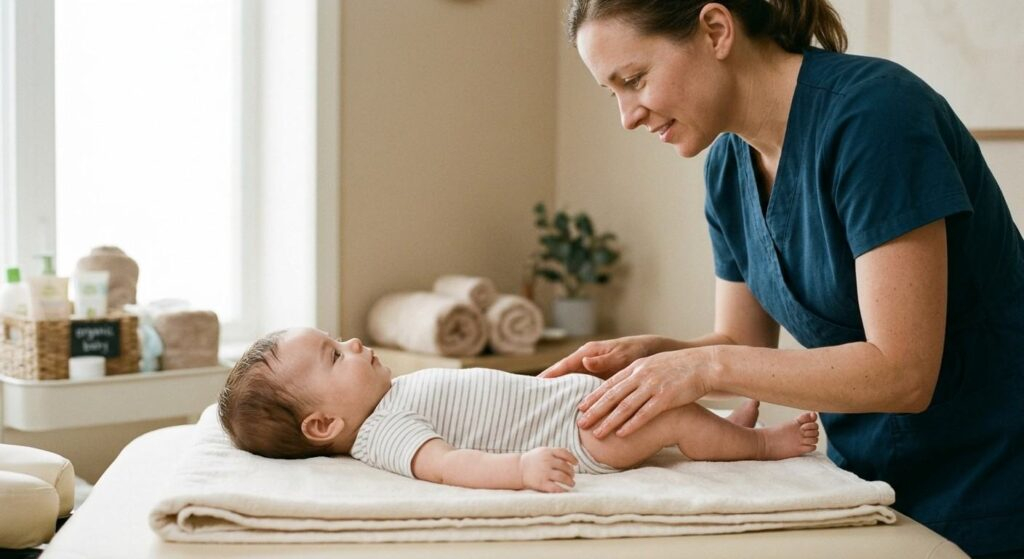
Step 2: Start With Your Baby’s Legs
Hold your baby’s foot with one hand and use both hands alternately to stroke from thigh to ankle. Rub her feet from heel to toe and lightly stroke each toe. Do it three to five times per leg.
Step 3: Move to the Tummy
Put your hand gently on your baby’s tummy before making slow circular motions around her navel. Be gentle; do not rub near her healed umbilical cord and stop immediately if she feels uncomfortable.
Step 4: Massage the Arms
Support your baby’s wrist area and stroke from the shoulder to the wrist. Use alternate hands, thumb strokes on the palms, and stroke each finger softly. Perform these soothing strokes on the other arm as well.
Step 5: Gentle Head Massage
Support your baby’s head firmly and perform scalp circles using fingertips. Apply light pressure but avoid soft spots. Stroke from forehead to temples and also stroke around the ears.
Step 6: Finish With the Back and Enjoy the Moment
Place your awake baby in the prone position under supervision. Stroke the baby from the shoulders to the hips, but avoid the spine area. Finish with cuddling, removing extra oil, and dressing up the baby.
Safety reminder: Always position your baby on their back for sleeping. Never leave them unsupervised during massages or positioning on their stomachs.
How Long Should a Baby Massage Last?
The perfect length will depend on the age of your baby, mood, and comfort level.
| Baby’s stage | Suggested approach |
| Newborn | Start with brief nurturing touch |
| Young infant | A few minutes, increasing gradually if comfortable |
| Older infant | Around 5–15 minutes if they enjoy it |
| Premature infant | Follow the neonatal team’s recommended duration |
This is an offer of suggestions, not medical prescriptions. It is possible that your baby prefers shorter sessions. There is no necessity to massage all parts of the body during each session. A few strokes on your baby’s feet and/or hands can suffice.
Baby Massage Safety Tips Every Parent Should Know
Baby massage should always prioritize comfort, gentle handling, and safety
Avoid Massage When Your Baby Is Unwell
Never massage a baby who has a fever, an illness, or an unknown cause of discomfort. Consult a medical practitioner before massaging a baby who has a medical issue, recently undergone surgery, has sustained an injury, or has developed a skin infection.
Never Apply Deep Pressure
Babies have fragile bone structure, muscles, joints, and skin. You must never:
- Rub your baby forcefully.
- Apply deep pressure on her abdomen.
- Tug or twist her arms and legs.
- Massage her spine directly.
- Move her neck and joints around.
- Bounce or shake while massaging your baby.
A baby’s massage must not be like the massage that adults receive.
Watch Your Baby’s Signals
Your baby can communicate his/her discomfort by:
- Crying or becoming unusually fussy.
- Turning their head away.
- Stiffening their body.
- Pulling their arms or legs away.
- Showing signs of overstimulation.
If your baby shows any signs of being uncomfortable, then stop right away. You can do it at a later time when he or she seems ready.
Follow Safe Sleep Guidelines
Massage does not replace safe sleeping practices. When the baby sleeps, put them in a back position on a flat and firm surface with no blanket, pillow, or any other object. Do not let the baby sleep on the massage table, changing table, or on the bed.
Baby Massage vs. Regular Baby Touch
Sometimes parents confuse baby massage with normal nurturing touch, but both can help create a connection with an infant.
| Feature | Baby massage | Regular nurturing touch |
| Main approach | Structured, gentle strokes | Holding, cuddling, and stroking |
| Duration | Usually a short session | Can happen throughout the day |
| Purpose | Comfort, relaxation, and bonding | Comfort, reassurance, and connection |
| Technique | Specific movements on body areas | Natural physical interaction |
| Equipment | Optional towel or suitable oil | Usually none |
FAQs
Can baby massage help babies sleep?
Massage therapy can be used to aid some babies in relaxing themselves at bedtime. It has not been found through any study that massage therapy aids in sleep duration and preventing them from waking up during the night.
Does baby massage help with gas?
A mild tummy massage might be helpful in making some babies feel good if they have gas. But it is not a cure for the digestive problem. Visit a doctor if your baby suffers from any abnormal symptoms.
Should I massage my baby before or after a bath?
Both techniques could be used. While some people massage their babies after giving them a bath, others prefer doing the same after bathing. Massage is not recommended after feeding the babies, keeping them warm all the time.
Can I massage my baby without oil?
Yes. Baby massage does not require oil. You can use gentle touch and slow movements without applying any product to your baby’s skin.
Is baby massage safe for premature babies?
Premature babies may have special needs for massage therapy in some clinics. Each baby is unique and may need personalized attention. Talk to your neonatal health care provider before trying massage at home.
Can baby massage help with colic?
Massage therapy is soothing to babies who suffer from colic. However, baby massage is not supported by research as an effective treatment for colic. Consistent or excessive crying should be evaluated properly medically.
Conclusion
Baby massage is one of the ways for parents to form an emotional bond with their babies, promoting relaxation, soothing, and sensory perception. Slow and gentle movements and attentively watching how your baby reacts during the process can turn it into fun. Find a quiet place, adhere to all safety measures, and do not use massage when your baby feels sick. Keep in mind that every baby reacts in its own way.