
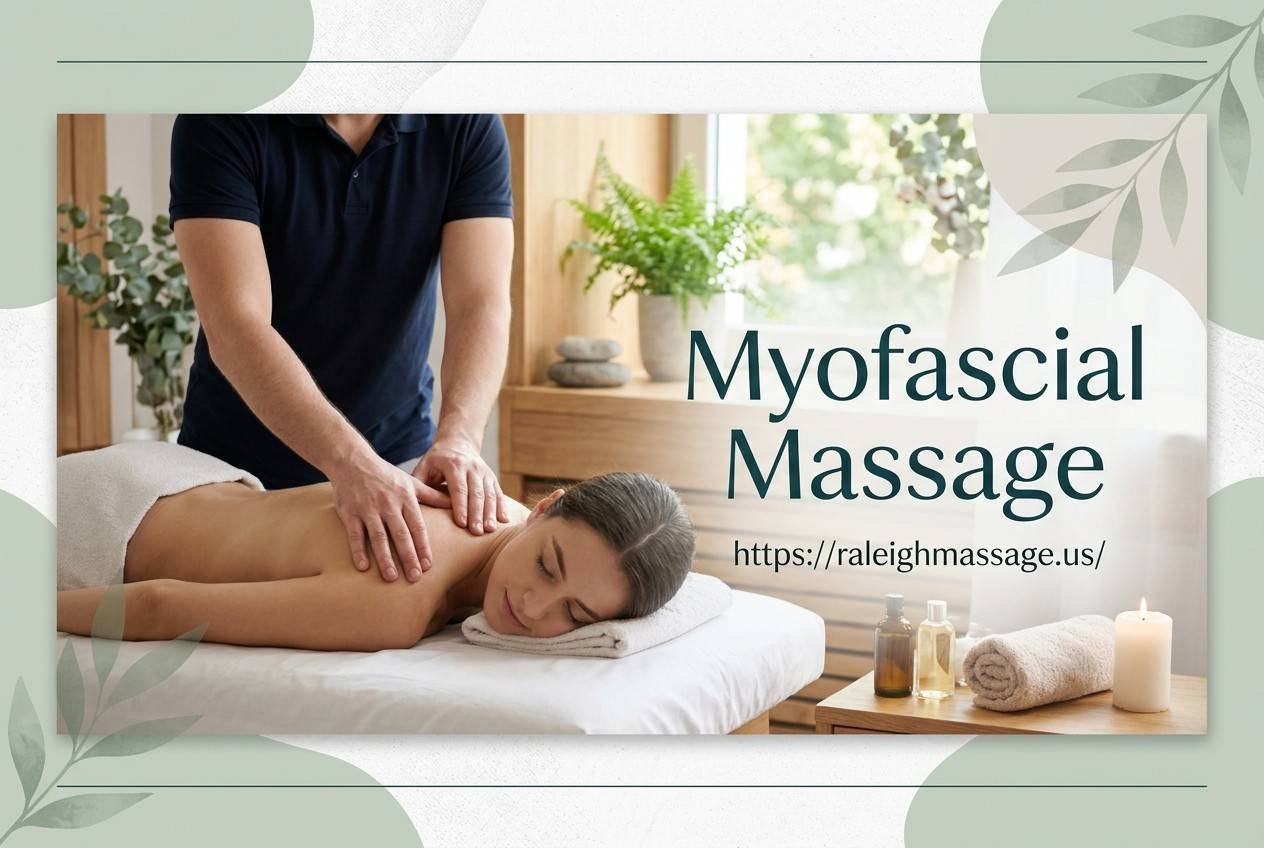
Discover what myofascial massage is, its benefits, techniques, possible side effects, safety tips, and how often to book a session for pain relief.
Myofascial massage is a form of manual massage that targets fascia, a thin connective tissue layer surrounding your muscles, bones, and organs. A therapist applies slow, sustained pressure, along with stretching, to relieve tension in the fascia. The goal is to relieve pain, improve mobility, and relax muscles.
What Is Myofascial Massage?
The myofascial massage technique involves manual massage targeting the fascia, which is connective tissue that surrounds muscles across the body. Slow and deep pressure and stretching techniques are used in the process to relieve areas of discomfort, tightness, and restriction of movement. This is unlike a typical relaxation massage where all body parts are targeted at once. Individuals who have persistent muscle tension, stiffness, or lack of flexibility may consider trying this massage.
What Is Fascia, and Why Does It Get Tight?
The fascia is a very thin webbing of connective tissue that is composed mostly of collagen. The fascia envelopes all muscles, muscle fibers, bones, nerves, and organs in the body. Imagine the white, translucent covering of a chicken breast.
A healthy fascia is usually slippery and very flexible. This makes it possible for the muscles to glide against each other whenever there is any movement. The fascia is home to a lot of nerves, so it is involved in sensation.
Common reasons fascia feels tight
Some common contributing causes for tight muscles and fascia include prolonged sitting while performing office duties or on the I-540, repeated exercise including running, playing tennis, weightlifting, and typing, injury or surgeries that result in scar tissue formation, poor posture, continuous stress, dehydration, and lack of exercise. These factors can cause increased muscle tension and difficulty in movement, making certain areas tight or sore.
Benefits of Myofascial Massage
Reduce chronic pain
Myofascial massage concentrates on tight fascia and trigger points, which generate chronic pain. The application of slow and sustained pressure may calm the irritated tissues and nerves, thus making people with back, neck, and shoulder pain more comfortable.
Improve mobility and flexibility
Smooth movement of fascia means greater flexibility of the muscles and joints. Myofascial techniques stretch the tight tissues and relieve fascial adhesions; as a result, your body movements become much easier in the course of everyday activities and training.
Enhance circulation
Sustained pressure and stretching increase blood flow in the compressed area. Thus, better blood circulation may deliver oxygen and nutrients to the fatigued muscles, as well as remove metabolic wastes from the affected tissues.
Release muscle tension
The therapist maintains slow pressure on the tight spots until the tissue becomes soft. As a result, knots and guarding in the muscle and fascia around it may be released, especially in the neck, shoulders, and hip areas.
Promote relaxation and stress relief
The effect of slow and rhythmic touch is your body’s relaxation response. Heart rate and respiration become slower, muscles relax, and the brain calms down, so most clients leave feeling relaxed, decompressed, and prepared for a good night’s sleep.
Support injury recovery
After your doctor clears you, myofascial techniques can help relax tightness in injured areas, reduce scar tissue formation, and correct movement patterns. They are useful during rehabilitation and training but cannot replace medical treatment or recommended physical therapy.
What Does Science Say?
Chronic Low Back Pain (CLBP)
Several randomized controlled clinical trials show that myofascial release alleviates pain and improves functionality in adults with chronic low back pain. The majority of those trials involve small samples, and that is why clinicians describe current evidence as promising but inconclusive.
Meta-Analysis on Low Back Pain
Some meta-analyses that combine trials indicate that myofascial release is more effective in reducing low back pain compared to control interventions on a short-term basis. Scientists assess certainty as low to moderate due to variation in trial quality, techniques, and follow-ups.
Institutional Support and Research Gaps
Myofascial techniques are taught by professional organizations and studied at universities, but there are still issues. These studies require standardization of technique, larger sample sizes, long-term follow-up, blinding, and explanation of the mechanism behind the biological response.
Conditions Myofascial Massage May Help
Therapists and clinicians often utilize myofascial techniques for treating the following problems:
- Chronic low back pain
- Neck and shoulder stiffness, such as tech neck
- Headaches associated with tight neck and shoulders
- Myofascial pain syndrome and trigger points
- Fibromyalgia (with gentle pressure)
- Plantar fasciitis and tight calves
- Hip stiffness and IT Band pain
- TMJ and Jaw Stiffness
- Sports-related stiffness and lack of range of motion in athletes
- Scar tissue stiffness after surgery, as cleared by your surgeon
If your problem is acute, severe, or accompanied by numbness, weakness, fever, or swelling, consult your doctor. Massage promotes healing. It is not a substitute for diagnosis.
Does Myofascial Massage Hurt?
A myofascial massage is not supposed to hurt; it will not result in sharp pain. Patients report feeling a pull, deep stretch, or a gentle burn as the tight muscle fibers release. The painful points might be very intense at first but will soon fade as the practitioner keeps pressing. It is important to stay within a range of 5 to 7 on the pain scale of 10. Pain that goes beyond 8 means that you should ask your practitioner to decrease pressure because it works against the treatment goals.
Possible side effects
Myofascial massage is one of the safest forms of massage. Cleveland Clinic states that it has very little risk associated with it, comparable to other types of massage. The risks include:
- Sore muscles for 24 to 48 hours
- Feeling tired or sleepy
- Slightly red skin on the areas treated by the practitioner
- Light-headedness when standing up
Aftercare tips
- Hydrate yourself and have a snack if you feel exhausted.
- Take a walk to continue the circulation of the tissues.
- Apply some heat to ease the soreness of muscles; use warm showers.
- Repeat all the exercises you were taught by your therapist.
- Avoid vigorous exercise if you feel sore in your muscles.
Contact your doctor if you feel increasing pain after two days, along with any swelling, spreading bruising, numbness, and weakness.
Who Should Avoid Myofascial Massage?
Healthy adults can get myofascial massage without any risk. Some people are required to ask their doctors for clearance first or avoid it. The contraindications of myofascial massage according to the Hospital for Special Surgery are:
- Active cancer (malignancy)
- Aneurysm
- Acute rheumatoid arthritis flare-ups
- Advanced diabetes
- Severe osteoporosis
- Healing fractures
Also talk to your doctor or tell your therapist before booking if you:
- Have a blood clot or a history of deep vein thrombosis (DVT)
- Take blood thinners or bruise easily
- Have open wounds, burns, skin infections, or a rash in the area
- Had surgery recently
- Have a fever or feel unwell
- Are pregnant, so your therapist can adjust positioning and pressure (see our prenatal massage guide)
Always ensure that your conditions and any medications you take are listed in your intake form. This information will be used by a qualified therapist to ensure your safety.
How Often Should You Get Myofascial Massage?
It all depends on what you are looking for. While one session may help to relieve you, the real effect will only be seen after some time through a series of sessions.
| Your goal | Suggested frequency | Typical timeline |
| Chronic pain or stiffness | Once a week | 4 to 6 weeks, then reassess |
| Sports recovery | Every 1 to 2 weeks during training | Ongoing in season |
| Desk-related neck and back tension | Every 2 to 4 weeks | Ongoing maintenance |
| General wellness | Once a month | Ongoing |
FAQs
Is myofascial massage the same as deep tissue massage?
No. Deep tissue massage involves strong strokes that penetrate deeper into the muscles, while myofascial massage uses long strokes that stretch out the connective tissues. Myofascial massages have less pressure, but the pressure lasts for a very long time.
Why do I feel emotional after myofascial release?
Some people experience a rush of emotions, relief, or exhaustion during and after deep, slow bodywork sessions. Relaxation may put one off their guard, and stress often manifests itself physically.
Can myofascial massage help sciatica?
It may help when tight muscles in the hip and glutes, such as the piriformis, irritate the sciatic nerve. It will not fix sciatica caused by a herniated disc or spinal narrowing. Get a diagnosis first. Learn more in our article on massage for a pinched nerve.
What should I wear to a myofascial massage?
Dress comfortably. You remove your clothes depending on how comfortable you feel, and you are under a sheet. Some therapists require that you wear shorts and sports tops during physical work.
Conclusion
The use of myofascial massage can help reduce muscle tension and pain, and even increase flexibility through manipulation of the connective tissues around the muscles. The technique may also be useful in facilitating relaxation, movement, and the healing process of some injuries. However, results differ according to the needs of an individual. Choose a qualified therapist and let them know your comfort level, especially in case of a medical condition or constant pain.