
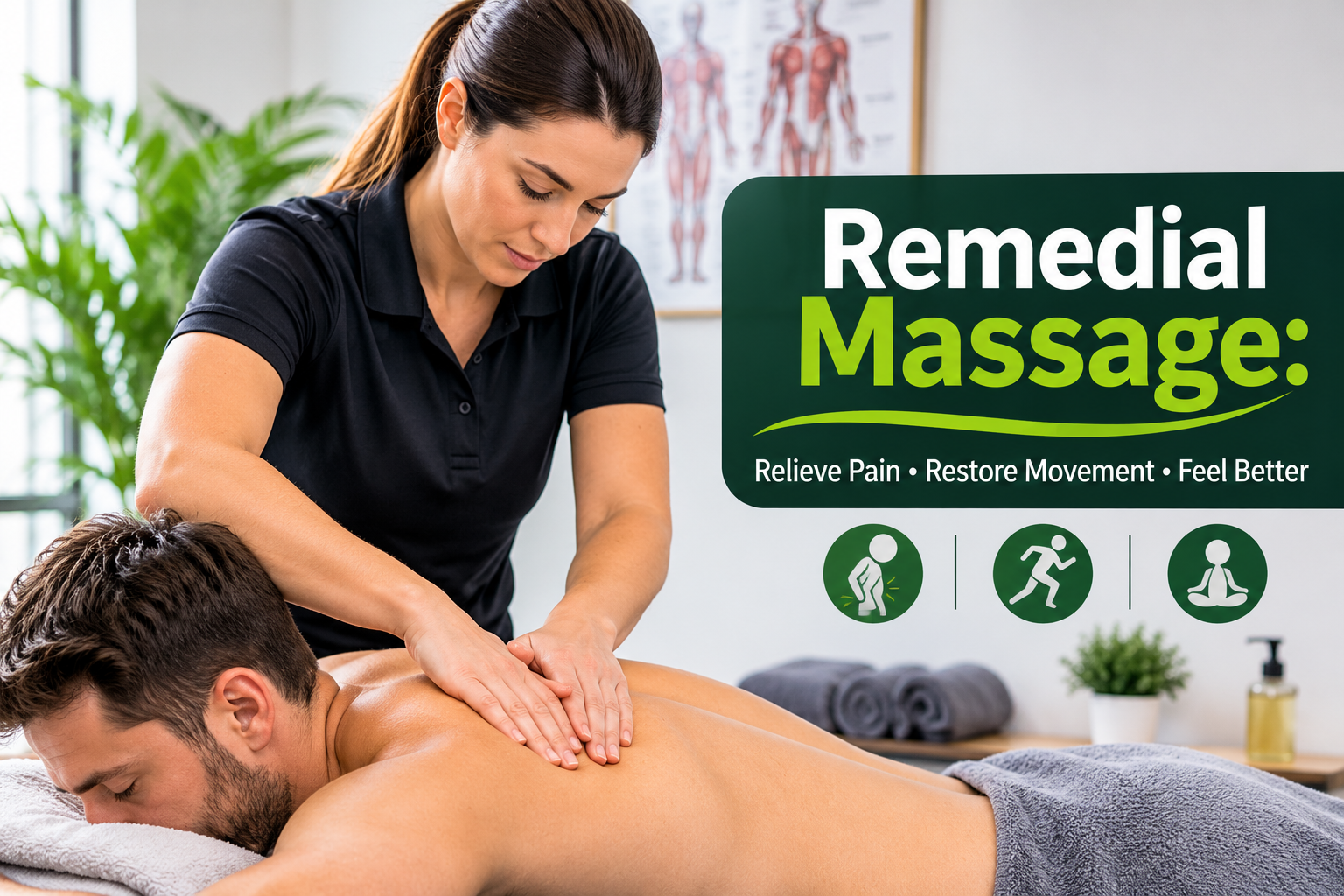
Discover what remedial massage is, its benefits, techniques, costs, and treatment process. Learn how it may help relieve muscle tension and discomfort.
Remedial massage is a highly specific massage treatment that focuses on addressing issues associated with the muscles, tendons, ligaments, and joints. A remedial massage therapist assesses your body, identifies the problem, and treats it using specific techniques. A relaxation massage allows one to relax. A remedial massage therapy is specifically designed to address a specific problem. People choose remedial massages to treat back pain, neck and shoulder pain, headaches, sports injuries, posture issues, and limited movement.
What Is Remedial Massage?
Remedial massage therapy is a form of specialized massage therapy that involves the application of different techniques on muscles, soft tissues, and movement impairments. This therapy requires an assessment by the therapist and application of the proper massage techniques such as deep tissue massage, trigger point therapy, and myofascial release. The goal of remedial massage is to alleviate pain, increase mobility, and aid in muscle repair to restore normal movement. It is often used with other types of health care services to address muscular and musculoskeletal conditions.
How Does Remedial Massage Work?
Remedial massage uses the technique of applying controlled pressure and movements to muscles and other soft tissues. The therapist concentrates on muscles and other soft tissues showing signs of being tight, sore, stiff, or in pain. Prior to performing the treatment, the therapist interviews you about your complaints, lifestyle, medical history, and treatment goals. Posture, movements, and muscle tension can be assessed.
The therapist then uses appropriate techniques based on your health status and your preferences. Such as:
- A person who has tight muscles in his or her shoulders can benefit from techniques aimed at releasing the muscles.
- A person who experiences low back pain can be given gentle soft tissue massage around the area.
- An athlete suffering from muscle pain can be given personalized treatment.
- A person whose movement is limited can be given massage along with suitable stretching techniques.
The therapist will change the pressure level during the entire session depending on what you say. Remedial massage is not about the use of pressure at all times. Rather, technique, application of massage, and assessment are more significant than the pressure used during massage.
What Are the Potential Benefits of Remedial Massage?
Remedial massage can be opted for by various people for varied reasons, especially if muscle strain or pain affects one’s ability to perform their regular activities. Some of its possible advantages are listed below.
Relief From Muscle Tension
Working long hours, repeating the same actions constantly, physical exercise, and bad working habits may lead to muscle tension. The massage might be used to alleviate it and make one more comfortable. Sometimes people have tight shoulders, a stiff neck, or painful back muscles and decide to turn to massage.
Support for Pain Management
Massage can temporarily alleviate a number of musculoskeletal pains in some people. The therapist can concentrate on those body parts that cause pain and make changes accordingly. However, there are varied reasons for pain. Massage is not the right solution to all injuries or conditions.
Improved Movement and Flexibility
Muscle tightness can make everyday movements uncomfortable. Massage, along with suitable movement and stretching, may be helpful for some individuals to ease their discomfort while moving. It is recommended that those who have continuous limitations should consult a professional to understand the problem.
Relaxation and Stress Reduction
In addition, focused massage is an activity that enables relaxation. Touching in a gentle way, being in a conducive environment, and the loosening of muscles can make individuals feel relaxed while undertaking the massage activity.
What Are the Common Techniques Used in Remedial Massage?
The choice of massage therapy technique will depend on the symptoms that the client is experiencing, their comfort levels, and their treatment objectives. The following are some techniques employed by massage therapists.
1. Deep Tissue Massage
Deep tissue massage involves the application of slow and deep pressure, which enables the therapist to target muscles at deeper levels. The therapist could employ their hands, knuckles, or forearms in order to alleviate pain from areas experiencing continuous tension. Deep tissue massage is normally preferred for treating neck tension, shoulder tension, and muscle tension. But deep pressure is not required by all clients.
2. Trigger Point Therapy
Trigger point massage targets sensitive spots in the muscle that can cause pain or discomfort in other places. Pressure is applied to the affected area based on the client’s reaction. Some sensitive spots in the shoulders can be responsible for pain in the upper back and neck.
3. Myofascial Release
Myofascial release technique employs gentle stretching and pressure focused on the fascia, which is the connective tissue that covers the muscles. This therapy targets the areas that appear tight and uncomfortable. The pressure and time applied depend on the type of therapy and the sensitivity of the client.
4. Effleurage and Petrissage
Effleurage is a traditional massage technique. This procedure utilizes smooth strokes in moving the hands over the skin. Effleurage is a very common technique employed by therapists at the start of a massage or when preparing an area for another technique.
5. Assisted Stretching
Some massage therapy sessions involve light stretching in order to deal with any restrictions in movement or tight muscles. The therapist will guide the stretching while keeping an eye on comfort levels. It is important not to stretch the joints past their comfortable limit.
Remedial massage vs. deep tissue massage
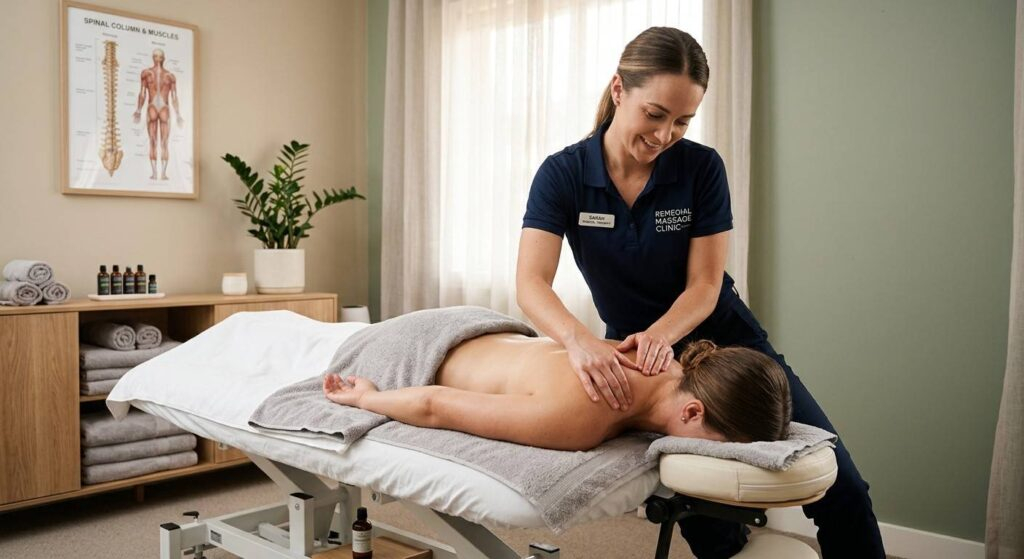
Deep tissue is a form of pressure applied to the deeper muscles. Remedial massage is a form of therapy involving assessment, treatment, and follow-up. The remedial therapist may employ deep tissue massage but may also change to lighter massages whenever needed by your body.
Remedial massage vs. sports massage
Sports massage helps the athlete in his/her performance, recovery, and injury prevention. Remedial massage helps everyone with a soft tissue condition regardless of where it emanates from, be it from sports, office work, or any other aspect of life.
What Conditions Can Remedial Massage Help With?
Remedial massage might help with symptom management in connection with certain conditions affecting the muscles and soft tissues.
| Condition or concern | How remedial massage may help |
| Neck stiffness | May reduce muscle tension and improve comfort. |
| Shoulder tension | Targets tight and uncomfortable shoulder muscles. |
| Lower back discomfort | May provide short-term relief from muscular discomfort. |
| Sports-related soreness | May help manage post-exercise muscle soreness. |
| Muscle spasms | May help reduce discomfort associated with muscle tension. |
| Restricted movement | May support comfortable movement when muscle tightness contributes to the problem. |
| Repetitive strain discomfort | May help manage muscular tension associated with repeated activities. |
| Headaches | May help some people whose headaches involve muscle tension. |
Important: The following are some of the uses of remedial massage and are not an assurance of the results that will be achieved from the treatment. The therapist is supposed to determine your symptoms and direct you to a relevant health care provider for further assistance.
What Happens During a Remedial Massage Appointment?
Your first visit should start with a discussion of your health and why you require the therapy. Knowing what to expect before the procedure may ease the whole experience.
Step 1: Initial Consultation
The practitioner will ask about your symptoms, medical background, lifestyle, and preferences for massage. Make sure to share information about your past injuries, recent surgeries, medications, and any other health concerns.
Step 2: Assessment of Problem Areas
The physical therapist will examine your posture, test some movements, and look for muscle tension. This evaluation determines which areas of your body need work. This procedure does not replace a medical diagnosis.
Step 3: Selection of Massage Techniques
The therapist chooses appropriate methods and explains the proposed treatment to you. You must be given the chance to ask questions, talk about the pressure you prefer, and give permission for the therapy to start.
Step 4: Massage Treatment
You will usually be lying down on the massage table as the therapist treats the designated areas. The therapist may apply massage oil or lotion to help the hands move freely. You should receive proper coverings with sheets or towels, exposing only the treated area.
Talk throughout the treatment. When the pressure hurts, or you feel any sharp pain, tell the therapist to stop or change the pressure.
Step 5: Aftercare Advice
After treatment, the therapist might advise you on some ways to relax the muscles. This may include light stretching or movement. Also, you should talk about the pain or discomfort after the treatment.
How Long Does a Remedial Massage Session Take?
The typical time spent during a remedial massage therapy can vary from 30 minutes to 90 minutes depending on the areas involved, type of massage therapy session, and personal requirements. Here is the outline:
| Session duration | Typical focus |
| 30 minutes | One specific area, such as the neck or shoulders. |
| 45 minutes | Targeted treatment of one or two areas. |
| 60 minutes | More detailed treatment of several related areas. |
| 90 minutes | A longer session addressing multiple areas, when appropriate. |
Your therapist will be able to advise you on the appropriate session time after taking into account your symptoms and treatment objectives. There is no one-size-fits-all session time.
FAQs
Is remedial massage suitable for everyone?
No. Individuals with some medical conditions or recent injuries and surgeries might require medical approval or changes before undergoing massage. Consult a physician and massage therapist about your health issues first.
Should remedial massage hurt?
No. The therapy may cause you some pressure or slight soreness, but it definitely should not hurt. Inform your therapist about your discomfort to adjust his or her methods.
Can remedial massage help with stress?
Yes, because remedial massage helps you relax, and the physical tension caused by stress decreases. However, in case of continuous anxiety or any other mental condition, massage does not substitute for mental health treatment.
Conclusion
Remedial massage can prove to be quite a useful choice for people who are suffering from muscle tension, stiffness, and other physical ailments. This form of massage employs specific techniques that target specific ailments, thus promoting comfort and ease of movement. Before booking an appointment for remedial massage therapy, you should have a detailed discussion regarding your symptoms, medical history, and treatment objectives with a qualified practitioner.