

Discover sciatica massage therapy, best techniques, deep tissue, and nerve pain relief methods to reduce pain, improve mobility, and relax muscles naturally.
Massage therapy for sciatica serves as an effective natural treatment method that successfully decreases muscle tension while enhancing blood flow and relieving pressure from the sciatic nerve. The combination of deep tissue massage for sciatica, buttock massage, and pinched nerve treatment offers effective solutions through massage therapy.
What Is Sciatica Massage Therapy?
Sciatica massage therapy is a special type of massage that aims at alleviating any pain brought about by the inflammation, irritation, or even the compression of the sciatic nerve. The sciatic nerve begins in the lower back, running through the hip, the buttocks, and extending down through both legs. This nerve is the biggest in the body.
The lower body experiences sharp pain, numbness, tinging, and weakness when this nerve becomes compressed. Massage therapy helps by relaxing tense muscles, which improves blood flow to the body and decreases pressure on the body’s nerves. The treatment serves as a standard component in comprehensive programs that provide sciatica relief.
Is Massage Good for Sciatica?
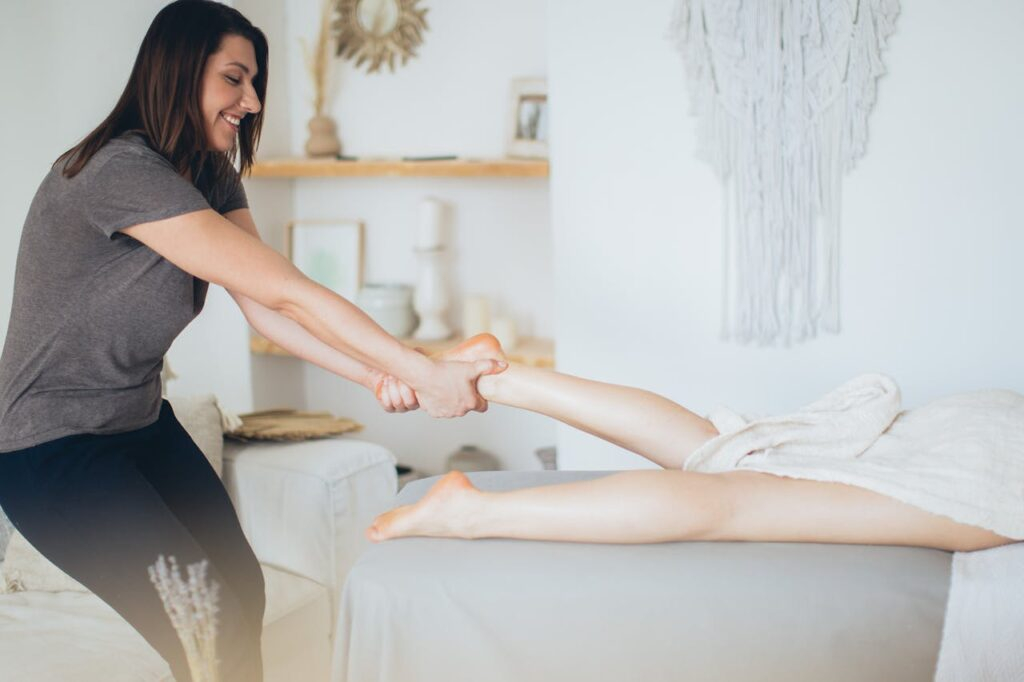
Yes, massage can be effective for sciatica when done properly by a qualified massage therapist. This is because massage relieves tension in the muscles located in the lower back, hip, and buttock regions, all of which can cause sciatica.
Massage promotes relaxation, increases blood circulation, and decreases inflammation in the affected area. Individuals often report an improvement in symptoms after a series of massage therapy sessions. Sciatica due to pressure from tight muscles, like the piriformis muscle, is greatly helped by massage.
Does Massage Help Sciatica?
Of course, massage is effective for sciatica because massage works on the muscles and soft tissues near the sciatic nerve. Although massage doesn’t help treat the damaged nerve, it assists in relieving tension in muscles, poor postures, or unbalanced muscles that contribute to sciatica.
Deep tissue massages, trigger point massages, and myofascial release massages are some techniques that may prove helpful. In addition, massage can alleviate stress, thus helping with the pain associated with sciatica. Many patients make massage therapy a necessary part of living with sciatica.
Best Massage for Sciatica
The best massage method for sciatica treatment depends on the specific cause and pain intensity. Deep tissue massage provides effective treatment for chronic muscle tightness and knot formation because it penetrates into deeper muscle tissue layers. Swedish massage delivers effective results for gentle relaxation while it enhances blood circulation.
When muscle knots develop in the buttocks or lower back region, trigger point therapy becomes the most effective treatment method. Myofascial release therapy enables the relaxation of tight connective tissues, which results in improved body flexibility. A professional massage therapist can help determine which massage style is best for your specific condition.
Deep Tissue Massage for Sciatica
Deep tissue massage for sciatica targets the deep muscle tissue and connective tissue to relieve ongoing tension and pressure, which affects the sciatic nerve. The treatment works best for individuals who experience tightness in their glute muscles and back pain, and those who have piriformis syndrome.
The massage technique employs slow and forceful pressure, which helps to release muscle knots and enhance the range of motion. Many people ask if deep tissue massage helps sciatica, and in many cases, it does provide significant relief. The procedure requires cautious execution because excessive force can intensify discomfort in areas that experience severe inflammation.
Swedish Massage for Sciatica
The Swedish massage treatment provides a milder approach to sciatic pain through its use of extended smooth movements and gentle touch to create muscle relaxation and better blood flow. The treatment works best for people who experience mild sciatic pain and for those who find stronger massage methods uncomfortable.
The massage technique helps decrease body stress while it encourages relaxation and speeds up recovery through better oxygen distribution to body tissues. The treatment provides pain relief to most people, although it does not reach the same level of muscle tension relief as deep tissue massage.
Trigger Point Therapy for Sciatica
The most effective massage treatment for sciatica shows better results through trigger point therapy when muscle knots create nerve compression. The treatment targets particular muscle tightness, which usually occurs in the buttocks, lower back, and hip regions.
The trigger points produce referred pain that travels down the leg, which resembles sciatica symptomatology. The therapist uses targeted pressure application to these specific areas, which leads to tension release and enhanced mobility. The technique serves as a standard treatment method for both piriformis syndrome and persistent sciatic discomfort.
Myofascial Release for Sciatica
Myofascial release functions as a massage method that specifically targets fascia, the connective tissue that surrounds muscles. The tightness of fascia creates two problems because it restricts movement and produces increased discomfort near the sciatic nerve.
This treatment uses slow, gentle stretching and sustained pressure to loosen restrictions and improve flexibility. The treatment benefits individuals who experience ongoing pain, together with muscle stiffness and difficulty moving their bodies. Myofascial release serves as an effective treatment method for patients with sciatica who experience postural problems and muscle imbalances.
Where to Massage for Sciatica
For a sciatica massage, you can concentrate your efforts on the lower back, glutes, hips, piriformis, and hamstrings. The reason is that tightness in the muscles in these areas leads to pressure on the sciatic nerve. Lower back massage reduces the stress in the lumbar region, while glute and piriformis massage relieve the tension in the glute muscles.
The hamstring massage therapy helps to increase flexibility while decreasing tension in the lower back muscles. The massage treatment needs to concentrate on the surrounding muscles instead of applying pressure to the nerve.
Visit Our Shop or Store
You can access our store through RaleighMassage to find a diverse selection of massage treatments. The various massage therapies available at our facility will help you achieve physical relaxation while diminishing your pain and enhancing your overall wellness. You can select your ideal massage treatment, which will provide you with professional-level care needed for your complete relaxation and recovery process.
Buttock Massage for Sciatica
Buttock massage serves as an effective treatment for sciatica because the sciatic nerve runs through this region and becomes blocked by tight glute muscles and piriformis syndrome. The massage targets the gluteus maximus muscle, gluteus medius muscle, piriformis muscle, and deep hip rotator muscles.
Therapists apply deep pressure while moving in circular patterns to create trigger point release, which helps decrease muscle tightness and alleviate nerve pressure. Proper buttock massage treatment helps decrease leg radiating pain while boosting hip movement capacity.
Sciatic Nerve Massage
The process of sciatic nerve massage does not permit therapists to touch the nerve because they need to treat the muscles and soft tissues that surround the nerve area. The treatment aims to enhance movement ability while reducing discomfort and promoting natural body recovery processes.
Professional massage therapists use specific techniques to treat affected areas because direct nerve pressure leads to increased symptoms. The method helps to soothe damaged tissues while bringing back proper body functions.
Sciatica Massage Treatment
Sciatic massage therapy typically involves a thorough evaluation of posture, muscle tightness, and pain before starting any massage therapy. The typical approach involves lower back massage, hip manipulation, buttock massage, and stretching techniques.
Heat therapy, foam rolling instructions, and exercise routines for use at home can be added by some practitioners. Besides addressing the present pain issue, sciatic massage aims to prevent future problems. A custom-tailored massage therapy program is likely to produce better outcomes.
Can Massage Therapy Help Sciatica?
Yes, massage therapy will work well for sciatica since it relaxes the muscles and promotes natural healing within the body. Massage is very useful for people suffering from sciatic pain if it results from muscle strain, bad posture, excessive sitting, and piriformis syndrome.
Massage therapy boosts circulation, alleviates inflammation, and encourages correct movement patterns. Although serious disc issues may require professional treatment, massage therapy is considered one of the most efficient ways to deal with sciatica without resorting to medicines or other invasive procedures.
Massage for Nerve Pain
Massage therapy is beneficial to nerve pain patients through the reduction of muscle tension and improving the blood flow to the irritated nerves. Nerve pains result from stiff muscles, causing pressure on the nerves.
Massaging promotes recovery by decreasing inflammation and increasing the supply of oxygen to injured tissues. Massage therapy is suitable for treating conditions such as sciatica, pinched nerves, trapped nerves, and nerve pain in muscles. The massage technique should only target the muscles surrounding the nerve and not the actual nerve.
Massage for Pinched Nerve
The massage therapy for a pinched nerve treatment works by decreasing muscle tension around the affected nerve. The condition of a pinched nerve can develop in multiple areas of the body, including the neck and shoulder, and the back and hip region, which results in symptoms of pain, tingling, and numbness.
Massage therapy relaxes tense muscles while enhancing blood circulation and decreasing swelling. The choice of massage technique depends on the severity of the condition, which includes deep tissue massage, Swedish massage, and trigger point therapy. Proper massage techniques lead to faster healing and decreased pain for individuals.
Can a Massage Help a Pinched Nerve?
Yes, massage may help with pinched nerves if the pressure on the nerve is due to muscle tension or soft tissue swelling. Massage works because it relaxes the muscles around the area where the nerve is compressed and restores mobility.
It also improves blood flow, which helps heal injuries and prevent stiffness. Nevertheless, if the compressed nerve is a result of a structural problem, such as a ruptured disc, massage therapy must be accompanied by a doctor’s evaluation.
Can You Massage a Trapped Nerve?
The trapped nerve should never be massaged with too much pressure since this will increase the irritation and pain in the affected area. Instead, massage should be applied to the muscle tissue, fascia, and soft tissues that surround the trapped nerve.
This will help reduce the compression of the trapped nerve safely and avoid further irritation. In case of a trapped sciatic nerve, the areas around the lower back, hips, and gluteus maximus muscles will be targeted for massage therapy.
Deep Tissue Massage for Pinched Nerve
Deep Tissue Massage on the Pinched Nerve becomes beneficial when one suffers from nerve compression due to tight muscles. Deep tissue massage involves the application of deep pressure to target tight muscles.
This massage technique enhances your flexibility, range of motion, and improves your posture. Deep tissue massage works effectively for nerve pain in the lower back and shoulder tightness. But a person needs to be very cautious about applying this type of massage to the pinched nerve.
Swedish Massage for Pinched Nerve
The Swedish massage treatment for a pinched nerve uses soft strokes and light pressure to help relax muscles and decrease tension. The treatment provides optimal benefits for individuals who experience mild nerve pain and cannot tolerate intense massage methods.
The massage treatment enhances blood circulation and promotes body relaxation while helping to diminish muscle tension that leads to nerve discomfort. The procedure is frequently prescribed to patients who are in their initial recovery period or who need assistance with general pain relief.
20 Types of Massage
Many massage techniques exist that go beyond the common massage methods that most people know. The available massage techniques include prenatal massage, Thai massage, aromatherapy massage, chair massage, lymphatic drainage, craniosacral therapy, neuromuscular therapy, medical massage, and full body massage.
The different types of treatment provide specific support for various needs, which include pregnancy support, stress reduction, injury recovery, and circulation improvement.
The exploration of different massage techniques enables individuals to discover their most effective treatment method, which matches their body requirements and their daily activities.
Massage Therapy Techniques
The professional methods of massage therapy serve two main purposes, which involve enhancing muscle health and decreasing pain. The techniques include effleurage, petrissage, tapotement, friction, vibration, compression, stretching, trigger point release, and myofascial release.
Each technique serves a different purpose. Some techniques enhance blood circulation, while other techniques help to release muscle tension and improve flexibility. The treatment methods skilled massage therapists use stem from their knowledge of the client’s condition and the desired treatment objectives.
Effleurage vs Petrissage
The two main massage methods which therapists use in their work are effleurage and petrissage. Effleurage involves smooth, gliding strokes that warm up the muscles, improve circulation, and promote relaxation. It is often used at the beginning and end of a massage session.
Petrissage involves kneading, lifting, and squeezing the muscles to release deeper tension and improve muscle elasticity. Effleurage is a light treatment that provides calming effects, while petrissage delivers deeper treatment, which helps muscles recover.
What Type of Massage Should I Get?
The choice of the right massage therapy is determined by your aims and ailments. In case you seek relaxation, a Swedish massage suits your purposes. If there are muscle spasms, chronic pains, and injuries in your body, a deep tissue massage will be beneficial for you.
In case you experience sciatica, a combination of trigger point therapy with deep tissue massage might help you. Sports massage is perfect for sportsmen and physically active people, whereas hot stone massage can relax you thoroughly. The key to selecting the right massage type lies in knowing yourself.
Conclusion
The natural pain relief and mobility enhancement from sciatica massage therapy serve as an effective treatment for long-term nerve health maintenance.
People suffering from sciatica require deep tissue massage, while those with sciatic pain need buttock massage, and people with pinched nerves require specific massage techniques, which will provide them with significant benefits.
Massage serves as a relaxation method, but it also operates as a pain relief solution and a way to help muscles recover. Professional massage therapists deliver safe treatment, which results in more effective outcomes.