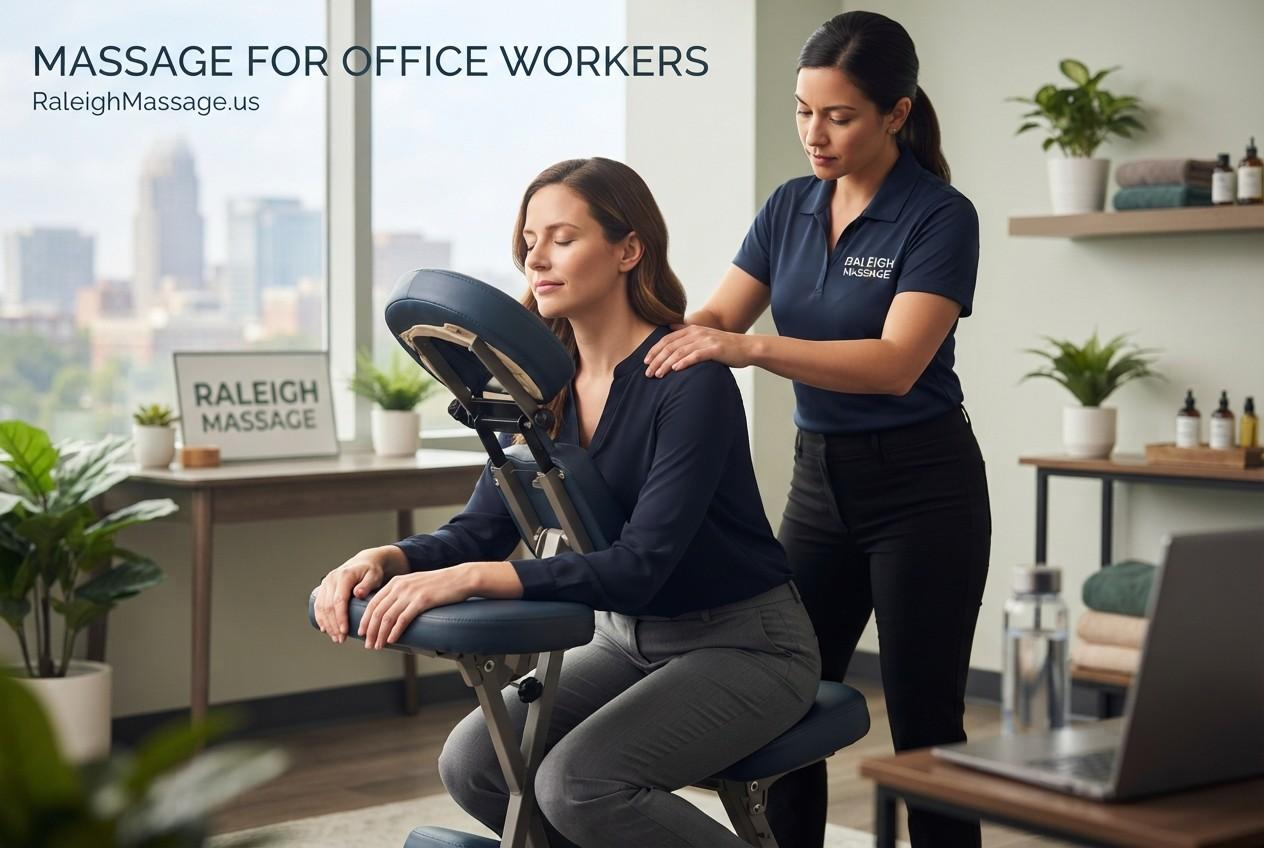
Discover how massage for office workers helps relieve desk-related neck, shoulder, and back tension, reduce stress, and improve everyday comfort.
Being at a desk for long periods of time can have an effect on physical comfort as many employees have to spend the whole day sitting in front of their computer. Repetitive motion of pressing keys on the keyboard, minimal physical activity, and bad workplace arrangement can lead to muscle tightness and discomfort. Massage is a relaxation-oriented technique that might help to alleviate muscular tension. Nonetheless, massage therapy should be applied together with other practices.
What Is Massage for Office Workers?
Massage Therapy for Office Staff involves massage treatments meant to ease the strain, stiffness, and soreness resulting from office work. The massage usually focuses on the neck, shoulders, upper back, lower back, arms, and hands.
The employee works in front of computers for six to eight hours or more. Staying in one position for long periods of time may continuously strain certain muscles.
Professional massage therapy can help adjust pressure and technique depending on how comfortable the client feels, areas that require attention, and personal preference. Some of the common objectives are:
- Release of tight neck and shoulder muscles.
- Decrease tension in the upper and lower back muscles.
- Provide relief for muscle tiredness from repetitive actions.
- Helping with relaxation after work-stress-filled days.
- Enhancing ease of motion.
- Providing overall physical and mental relaxation.
What Are the Benefits of Massage for Office Workers?
There are various advantages that one can benefit from through massage when they work a lot in office chairs. The outcomes will vary depending on personal requirements, techniques used, pressure, and the cause of the problem.
1. Helps Relax Tight Neck and Shoulder Muscles
Neck and shoulders tend to become tense when an individual tends to incline his or her head towards a computer screen or holds shoulders in one position for too long. An appropriate massage may relieve such pain. A practitioner could focus on the area around the upper trapezius, shoulders, and soft tissues.
2. May Relieve Lower-Back Discomfort
The lower back carries the weight of the upper part of the body when one is sitting down, standing, or moving. Staying in an uncomfortable posture for long periods can cause muscle fatigue and tightness.
A massage therapist can use light to medium pressure on selected muscles in the lower back to relax them. It helps provide temporary relief but cannot treat any spine-related problems.
3. Supports Stress Reduction
Work-related stress may influence psychological and physical health. A peaceful atmosphere, soothing massage practices, and concentration on relaxation will be useful for workers trying to relax after stressful working days. Swedish massage will be suitable for people preferring light pressure and long strokes.
4. May Improve Comfortable Movement
Muscle tension may complicate simple activities for people. Massage practice may assist some people in reducing muscle tension and improving their movements. Massage combined with stretching and physical exercises may enhance mobility.
5. Encourages Better Relaxation
Employees who have problems relaxing at home after work could find massage useful as a part of their own relaxation program. The procedure of massage could offer time free from the computer and other work obligations.
6. Helps Manage Muscle Fatigue
Repetitive actions and prolonged positioning may result in muscular fatigue. Massage might help relieve tension from tired muscles, especially those located in the shoulders, arms, and back.
Which Areas Should Massage Target for Office Workers?
The ideal massage treatment should be based on areas in which the patient feels a higher level of pain and tension because of work activities. The practitioner may talk to the client about his/her symptoms and choose the best way of performing the treatment.
Neck and Upper Trapezius
Neck and upper trapezius muscles participate in moving and stabilizing the head and shoulders. Constant exposure to computer screens may lead to problems in those muscles. The practitioner will perform gentle kneading, pressure, and soft-tissue techniques to release tightness in the area of these muscles.
Shoulders and Shoulder Blades
Shoulder muscles continue to be involved in the activities of typing, reaching, and using the mouse. Massage therapy can target the upper back, shoulder blades, and the muscles nearby in order to ease the feeling of stiffness.
Upper and Lower Back
Back muscles feel strain when one is seated for an extended period of time. A therapist can focus on appropriate muscle groups in the upper and lower back region. Pressure should be commensurate with the client’s comfort and health condition.
Forearms, Wrists, and Hands
Typing and using the mouse can make your hands and forearms fatigued. Massage of the hands and forearms can be helpful to loosen up the muscles in the area. The therapist should not apply deep pressure on areas that are painful, inflamed, and irritated by the nerves.
Hips and Gluteal Muscles
Sitting for long periods of time can result in stiffness in the hips and glutes. A therapist would address appropriate soft tissues in these regions when a client is experiencing muscle stiffness. Pressure and treatment guidelines need to be discussed before the therapy takes place.
What Type of Massage Is Best for Office Workers?
The best massage will depend on an individual’s symptoms, pressure tolerance, and health goals. While some may desire soothing methods of relaxation, others would be interested in targeted massages for their muscles. Here are several types.
1. Swedish massage
Swedish massage consists of long movements, gentle kneading, and varying pressure, which promotes relaxation. This type of massage can be suitable for people who work in offices and who:
- Have overall muscular tightness.
- Require pressure that is either gentle or moderate.
- Feel stress from the long day’s work.
- Seek relaxation from head to toe.
- Are new to professional massages.
Swedish massage is a great choice to start with, as it is very easy.
2. Deep Tissue Massage
Deep tissue massage involves slower movements and increased pressure applied to deeper muscle tissues. The technique is suitable for individuals suffering from chronic muscle tension and preferring a firmer touch. Possible areas for treatment involve the upper back, shoulders, and the right lower back muscles.
Deep tissue massage does not entail any severe pain. People with medical issues, those with recent injuries, or those with mysterious symptoms should seek advice before undergoing the procedure.
3. Therapeutic Massage
Therapeutic massages involve targeted massages based on specific areas that have muscle tension. A masseur is capable of modifying his treatment depending on the physical needs of the patient as well as the required results. Therapeutic massages may be ideal for workers who suffer from muscle tension in certain areas and do not just want to relax.
4. Hot Stone Massage
Hot stone massages involve the use of heated stones during a massage. The heat and massage motions may lead to a relaxing massage for those who like heat-based massages. Patients should inform the therapist of any conditions related to sensitivity and circulation prior to heat-based massages.
Massage for Office Workers in Raleigh and Wake Forest, NC
Raleigh Massage provides services for office employees in Raleigh, North Raleigh, Falls of Neuse, Six Forks, Wake Forest, and Rolesville. Our massage and bodywork specialists are certified professionals. If you need to make an appointment on the same day, we can do that as well.
- Raleigh: 804 Salem Woods Dr STE 204A, Raleigh, NC 27615
- Wake Forest: 1890 S Main St STE 100, Wake Forest, NC 27587
- Phone: 919-928-2934
Lunchtime or after-work visits fit perfectly within the workday. You can make an appointment online or over the phone to confirm opening times for that day.
Why Choose Raleigh Massage for Office Workers?
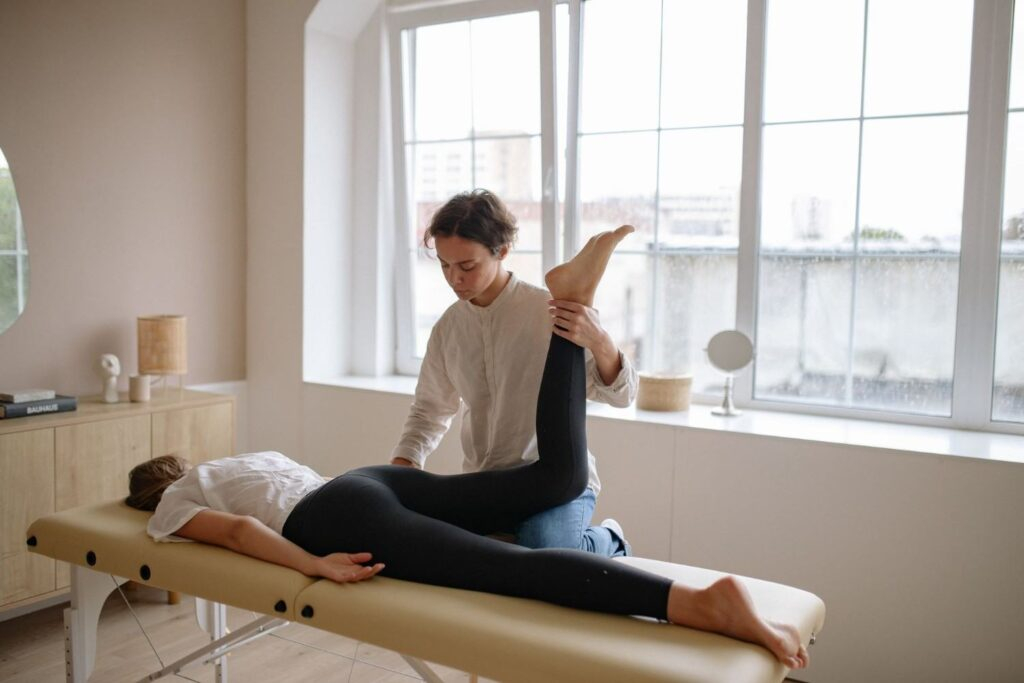
Professional massage therapists for office professionals in Raleigh, NC, can be found at Raleigh Massage. This business operates in Raleigh and Wake Forest, providing massage therapy with licensed massage therapists and a personal approach to the customer.
Services offered at Raleigh Massage may appeal to office workers who seek relaxing massage therapy after hard-working days or to relieve muscle tension from a desk work routine.
Available Massage Services
Raleigh Massage offers several treatments that office workers may consider:
| Service | How it may suit office workers |
| Swedish Massage | General relaxation and gentle muscle work |
| Deep Tissue Massage | Focused work on suitable areas of muscular tension |
| Customized Massage | Treatment tailored to individual preferences |
| Hot Stone Massage | Relaxation with warmed stones |
| Hot Himalayan Salt Massage | A heat-based relaxation experience |
The therapist can discuss pressure preferences and suitable treatment areas before starting the session.
Published massage pricing
| Service | Price |
| 60-minute customized massage | $90 |
| 90-minute customized massage | $135 |
| 60-minute couples massage | $179 |
| 90-minute couples massage | $249 |
Massage Techniques That Can Help Relieve Desk-Related Tension
The methods of massage vary according to the treatment procedure and the needs of the person. The following methods are frequently found to be used by massage therapists during professional massages.
| Massage technique | How it works | Main purpose |
| Effleurage | Long, flowing strokes | Promotes relaxation |
| Petrissage | Gentle kneading and lifting | Works on muscular tightness |
| Circular movements | Controlled circular pressure | Addresses selected muscle areas |
| Compression | Gradual pressure on soft tissues | Encourages muscle relaxation |
| Myofascial techniques | Sustained, controlled pressure | Addresses tension in surrounding connective tissues |
The following techniques will be chosen by an efficient massage therapist according to the area to be treated and the comfort level of the person. Harder pressure is not necessarily beneficial.
Simple Office Stretches to Complement Massage
Massaging is just one way of relieving stress from the muscles. Short exercise breaks and easy stretches will also assist employees in changing position throughout the day.
1. Neck Side Stretch
- Sitting comfortably, relax the shoulders.
- Gradually lean the head towards one shoulder.
- Stop at a comfortable stretch position.
- Pause for a moment without pulling the head.
- Do this exercise on the other side too.
2. Shoulder Rolls
- Either sit or stand in a comfortable posture.
- Lift the shoulders slowly.
- Then rotate them in a circle backwards.
- Be relaxed and do it again a few times.
- Then rotate in the opposite direction.
It is just a simple exercise that can help employees adjust their shoulder posture while doing desk work
3. Seated Upper-Back Stretch
- Sit with both feet flat on the floor.
- Position the hands in front of the body.
- Reach slowly in front.
- Let the upper back arch naturally.
- Get back to a relaxed position.
4. Wrist and Forearm Stretch
- Extend an arm in front of your body.
- Maintain a comfortably extended elbow.
- Position the wrist in a suitable stretching position.
- Rest for a few seconds.
- Do the same with the other arm.
If you feel any pain, tingling or numbness, stop the exercise immediately.
5. Standing Back Extension
- Position your feet at shoulder width.
- Hands should be placed on the hips.
- Gradually arch your body backwards.
- Go back to your original standing posture.
FAQs
Can massage help neck and shoulder pain from sitting?
Yes. Massage can loosen the tight muscles of the neck and shoulders as well as decrease the stiffness due to long hours of work on the computer. Pain should always be checked by a doctor.
Is massage good for people who work at desks all day?
A massage can assist desk workers in relaxing their tense muscles and getting short-term relief from some forms of pain in the neck, shoulder, and back areas. Proper movement and the right posture at the workstation are key to physical comfort.
Can massage help tension headaches from computer work?
Yes. Tension headaches are caused by tight muscles in the neck, shoulders, and scalp, and a massage can decrease the tension in those muscles.
Conclusion
Office worker massage can provide relief from muscle stiffness and decrease stress related to work. The methods of massage therapy include Swedish massage, deep tissue massage, and custom massage, which can help improve one’s well-being from a physical perspective. An effective combination of massage treatments and stretching, movement exercises, and correct arrangement of one’s workplace can contribute to good office health.