Learn why you should avoid massaging a painful ear, common causes of ear discomfort, and when to seek professional medical treatment for safe ear care.
Earwax is a natural lubricant secreted by glands inside your ear canal. Earwax catches dust particles, foreign bodies, and microorganisms and acts as a protective coating for the ear canal skin. Earwax moves out through the ear canal naturally when one talks or chews. Buildup of earwax happens because:
- You force it deeper using Q-tips, earphones, or hearing aids.
- Your ear canals are narrow and curved.
- You produce thick and dry wax because of aging.
- You use hearing aids and earplugs frequently.
People don’t generally require cleaning their ears. You should only do so when wax causes problems.
Signs of Ear Wax Blockage
- Fullness or plugging sensation in the ear
- Hearing loss
- Ringing in the ears (tinnitus)
- Itching or mild irritation
- Ear pain or a cough caused by pressure in the ear
Does Ear Massage Really Remove Ear Wax?
Massage works as an aid, but not as a replacement for treatment. This type of therapy doesn’t go deeper inside the ear canal and isn’t effective at removing impacted wax without any help from others. Ear massage does three important things:
- It moves the jaw joint and surrounding tissues, shifting the ear canal.
- It warms up the ear region and makes it relaxed enough to let softer wax flow out of it.
- It relaxes muscles of the jaw, neck, and temple associated with ear pressure.
The American Academy of Otolaryngology–Head and Neck Surgery (AAO-HNS) recommends not using any items in the ear canal. External ear massage adheres to the recommendations since it doesn’t use anything going inside the canal.
How to Massage Ear Wax Out: Step-by-Step Guide
Ensure that you wash your hands first. Perform the procedure on one ear only, using gentle pressure on the outer ear. Stop the process if you feel pain, dizziness, or any other uncomfortable sensation.
Step 1: Soften the Wax
Position yourself lying on your side, with the problematic ear upwards. Place 2–3 drops of any relevant earwax softening agent, including mineral oil or ear drops, into the ear canal. Observe the instructions given and stay in place for five minutes.
Step 2: Apply a Warm Compress
Use a warm washcloth placed on the exterior part of your ear for five minutes. The warmth could help soothe the surrounding muscles and make you comfortable. Do not use hot compresses because they irritate delicate areas.
Step 3: Massage Around the Ear
Repeat each move 5 to 10 times:
- Earlobe Tug: Gently pull on your earlobe, pushing it down and back slightly. Apply pressure softly but do not tug hard. This method gives an external massage but will neither stretch out an adult ear canal nor dislodge compacted earwax.
- Front-of-Ear Circles: Apply two fingers to the area in front of your ear, close to the joint with the jaw. Gently perform circular motions in the area for several seconds. This method may help loosen muscles in the area but cannot remove earwax from the ears.
- Behind-the-Ear Strokes: Use your fingertips to place pressure behind your ear and gently glide down towards your neck area. Do not press hard on painful areas. The main purpose of this method is to massage the muscles outside the ears.
- Outer Ear Rub: Apply the fold of your outer ear between your thumb and forefinger gently. Use gentle movements to massage the cartilage around the ear. Do not pull on the ear or squeeze it too tightly.
Step 4: Move Your Jaw
Gently open your mouth and close it five to ten times. You may even move your jaw to and fro slowly. These exercises involve movement of jaw muscles, but they will not guarantee that the impacted earwax is either moved or removed.
Step 5: Drain the Ear
Keep an upright posture, then tilt your head in a way that positions the affected ear downwards. Let any extra oil flow out onto a clean piece of cloth. Use a soft cloth to clean the external ear gently, without placing anything in the ear canal.
Important: Please follow the directions provided on the ear drop medication. Discontinue the treatment if you experience any discomfort. If your ear is still blocked after the prescribed treatment, seek medical advice.
Other Safe Ways to Remove Ear Wax at Home
1. Rinse With Warm Water
Ear Irrigation may help to get rid of softened earwax where applicable. But it may not be applicable for all. Avoid using irrigation techniques at home in case of having ear tubes, perforated eardrums, surgery on the ear, pain, or drainage from the ears.
2. Use an Over-the-Counter Ear Wax Removal Kit
Over-the-counter products for earwax removal can include softening solutions and irrigation systems. Make sure you use an approved product and adhere to its directions regarding how to apply the medication. Do not use instruments that may harm your ear canal or eardrum.
Can a Massage Therapist Help With Ear Pressure?
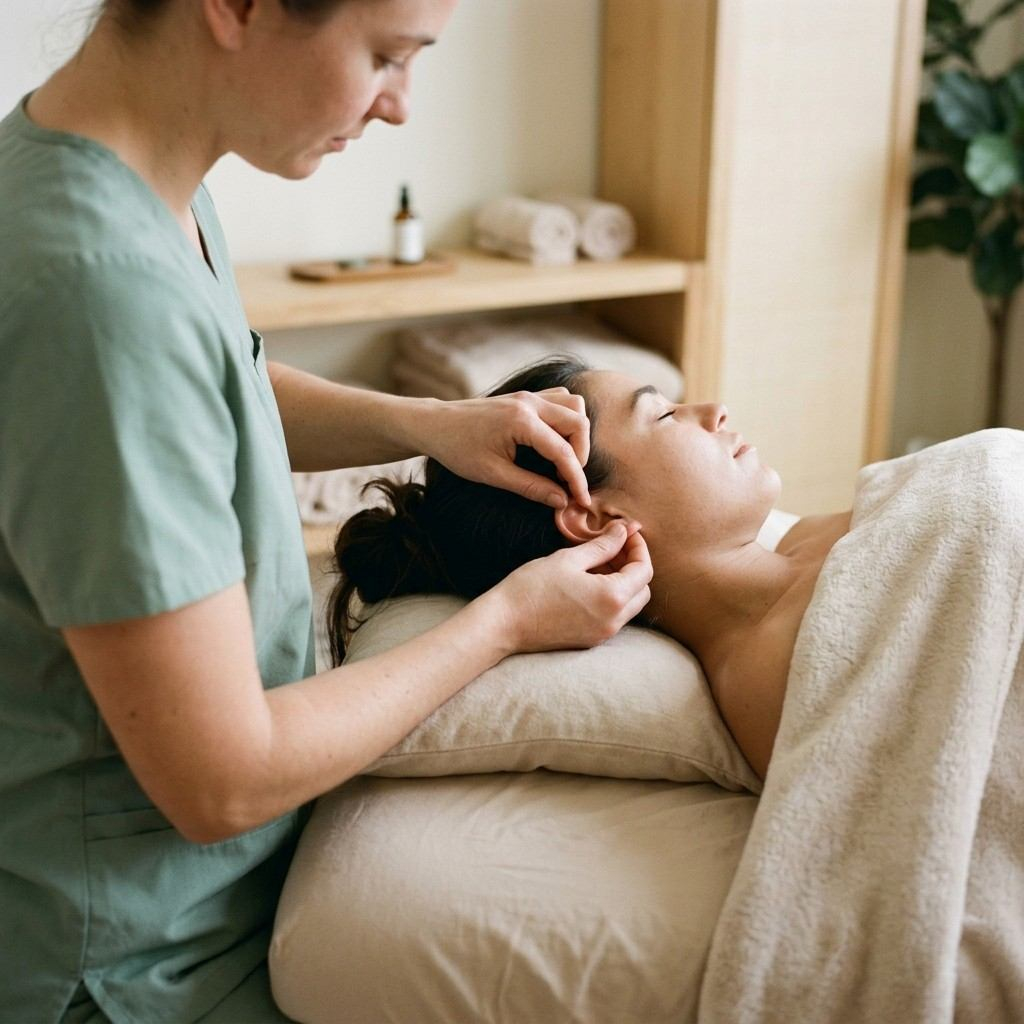
A massage therapist will not clean your ears of earwax and will not provide treatment for an infection in the ear. A massage therapist can address those tight muscles located in your jaw, neck, shoulders, and scalp, which are usually associated with ear fullness, jaw popping, and tension headaches.
If stress or jaw clenching is adding to your ear discomfort, the massage of the jaw, temples, and neck should be considered to help with that discomfort. Let your massage therapist know about any ear pain or hearing problems that you may be having prior to your massage.
Ready to ease neck and jaw tension? Book a session with Raleigh Massage.
How to Prevent Ear Wax Buildup
- Your ears should not be messed around with unless wax causes some symptoms.
- Just clean the outer ear using a wet cloth.
- Also, ensure that you clean your hearing aids and earbuds regularly.
- Always ask your doctor to examine your ears whenever you visit, particularly if you are using hearing aids.
- If you tend to produce hard wax, use ear drops on rare occasions.
Can Massage Help With Relaxation?
Yes. Gently massaging the outer ear is one way to relax. Tension can accumulate in the ears, jaws, neck, and muscles, particularly after many hours of work or stress. Some individuals enjoy gentle massaging around their outer ear. Relaxation effects may include:
- Making it easier for you to wind down at the end of the day.
- Making you more conscious of any tension in your jaw or face.
- Offering a relaxing experience.
- Helping you to relax when you do other wellness activities.
Ear massage should not be used as a substitute for treatment for earwax, ear infections, or hearing difficulties.
Difference Between Ear Massage and Earwax Removal
These two practices serve different purposes.
| Feature | Ear Massage | Professional Earwax Removal |
| Main purpose | Relaxation | Remove impacted earwax |
| Technique | Gentle external touch | Clinical removal methods |
| Equipment | Usually fingers | Specialized medical equipment |
| Removes hardened wax | No | Yes, when appropriate |
| Provider | Individual or massage therapist | Trained healthcare professional |
This will help you select the best service for your requirement.
Conclusion
Avoid massaging your ear if you experience pain, swelling, or irritation. These symptoms may indicate an infection, injury, or another underlying condition that requires medical attention. Do not insert fingers or tools into your ear canal. Consult a healthcare professional to identify the cause and receive appropriate treatment. Early evaluation can help prevent complications and protect your hearing.
Frequently Asked Questions
Is it safe to massage your ear if you have an ear infection?
No. Do not use oil drops, water, or pressure if you experience pain in your ears, discharge, or fever, or if an infection is suspected. Consult a doctor first.
Is it safe to use Q-tips to clean earwax?
No. Q-Tips might push wax further inside the ear canal and may even injure the delicate skin inside the canal or the eardrum. Use a moistened soft cloth for cleaning the outer part of your ear.
Should I massage my ear if it hurts?
Avoid massaging a painful or irritated ear. Pain in the ears may be due to infections, injuries, or other health issues. Seek medical help to diagnose the problem.